Tyson Huia1 and Jeremy Hapeta1
University of Canterbury, Aotearoa New Zealand
Citation:
Huia, T., & Hapeta, J. (2026). Sport-for-Development for Māori in Aotearoa New Zealand: a scoping review. Journal of Sport for Development. Retrieved from https://jsfd.org/
ABSTRACT
This scoping review addresses the question: “What academic literature exists on Sport-for-Development (SFD) programs for Māori in Aotearoa New Zealand, and what themes can be extrapolated from this scholarship?” Indeed, the aim was to identify key themes within literature to inform practice, policy, and future research implications. Guided by Arksey and O’Malley’s (2005) framework, this review applies a Kaupapa Māori Theory (KMT) lens using the Ngā Poutama Whetū (NPW) analytical process, therefore centering Māori values in the synthesis and interpretation of SFD evidence. This ensures that kaupapa Māori aspirations remain central to the interpretation of the evidence. Searches conducted in Scopus, SocINDEX and SPORTDiscus, identified 17 relevant peer-reviewed articles published from 2007 to 2023. Thematic analysis identified three interconnected themes: cultural revitalization and identity, challenges and barriers, and holistic wellbeing, and community engagement. Across the literature corpus, SFD initiatives worked best when grounded in Kaupapa Māori, led by Māori, and structured by relationships that prioritized cultural safety, wellbeing and community-focused outcomes. In contrast, inconsistent governance, cultural misalignment, and systemic barriers continued to constrain Māori participation and self-determination in sport. This review contributes to sustained, Māori-led SFD approaches, identifies key research gaps and highlights NPW’s methodological contribution to strengthen Māori cultural identity.
INTRODUCTION
Historically, sport in Aotearoa New Zealand has functioned as a site of both assimilation and social cohesion, often reinforcing colonial norms and marginalizing Māori (Palmer et al., 2021; Spoonley & Taiapa, 2009). Several recent studies provide insights into how sport has impacted Māori, in terms of assimilation into mainstream society (Erueti & Palmer, 2014; Hapeta et al., 2019; McCausland-Durie, 2007; Palmer et al., 2023; Ryan, 2007; Walker, 2011). Furthermore, sports are often used as a tool for social cohesion, bringing diverse communities together and fostering a sense of national identity (Hapeta et al., 2019; Manuel, 2015; Muriwai et al., 2023; Nelson et al., 2023; Reweti & Severinsen, 2022; Walker, 2011; Watson et al., 2016).
In Aotearoa New Zealand, the notion of social cohesion is embedded in historical and ongoing efforts of the Waitangi Tribunal. Established in 1975, the Tribunal is the entity responsible under the Treaty of Waitangi Act (1975) to investigate and report on claims brought by Māori relating to breaches of Te Tiriti (the Treaty of Waitangi) by the Crown (Waitangi Tribunal, 2015). Since inception, their recommendations have resulted in settlements involving monetary compensation and the return of land to Māori iwi (tribes) as well as initiatives supporting cultural revitalization (Waitangi Tribunal, 2015). In addition, the Tribunal has advocated for improving the education system to support Māori aspirations and outcomes.
From 2018 to 2022, their findings showed the Crown’s school reforms breached treaty principles (Waitangi Tribunal, 2021; Waitangi Tribunal, 2024). The Tribunal found the Crown failed to consider the needs of Kura kaupapa Māori (Māori immersion schools) during the education system reforms (Waitangi Tribunal, 2021).
“This lack of engagement not only disregarded the importance of Kura Kaupapa Māori but also neglected the vital role which Kura play in fostering and preserving Māori culture and identity” (Teanau Tuiono, 2024, para. 8). Emphasizing cultural responsiveness within the education system, enabling Māori learners to flourish =(Waitangi Tribunal, 2021). Collectively, these efforts have contributed to restore more equitable Te Tiriti relationships between Māori and the Crown (Waitangi Tribunal, 2015). This contribution is particularly significant when situated against the systematic deliberate erosion of Māori cultural heritage, traditions, values, and language, a practice, described as ‘cultural genocide’ (Reyhner & Singh, 2010). For example, education policies including the Native Schools Act of 1867, enforced the assimilation of Māori children and suppressed te ao Māori (WAI 11 Waitangi Tribunal Te Reo Māori Claim, 1989). In the health sector, these Tiriti-based commitments are reflected in Whakamaua, the Government’s Māori Health Strategy, led by the Ministry of Health to address inequities for Māori (Whakamaua Ministry of Health, 2020). Reinforced by the Wai 2575 Health Services and Outcomes Inquiry, which emphasizes improving health outcomes through health promotion and community sport (Waitangi Tribunal, 2021; Ministry of Health NZ, 2024).
For the purposes of this review, we refer to ‘Sport-for-development’ (SFD) as the intentional use of play, active recreation and sport (PARS) as tools to achieve social, cultural and economic development outcomes, beyond PARS alone. Scholars, Smith and Smith (2023) acknowledged that SFD initiatives in Aotearoa NZ can bring about transformative change for Māori, especially interventions that address their social, cultural, and economic development aspirations, in addition to physical activity outcomes (Sport New Zealand, n.d.). He Oranga Poutama promotes physical activity and wellbeing among Māori communities in Aotearoa NZ (He Oranga Poutama, 2022). It delivers PARS activities, culturally appropriate to Māori, supporting community leadership and participation in play, active recreation, and sport (He Oranga Poutama, 2022; Sport New Zealand, n.d.).
To support the outcomes of SFD initiatives involving Māori, Sport New Zealand (Sport NZ) commissioned a report to analyze Māori participation and involvement in community sports (KTV Consulting, 2017). Although the benefits of SFD objectives are widely emphasized (Coalter, 2010) the research to support these claims is still burgeoning for Māori and other Indigenous communities globally. Due to the limited SFD studies published in relation to Māori, we adopted Sport NZ’s conceptualization to consider ‘SFD’ as inclusive of any PARS programs. Thus, SFD initiatives identified in this review includes formal PARS programs, such as He Oranga Poutama, but also any organizations that use PARS as part of broader youth development agendas.
Sport policy in Aotearoa NZ continues to promote sport as a social development tool. Including through commitments to enhancing wellbeing and social cohesion using PARS (KTV Consulting, 2017; Sport New Zealand Aotearoa, n.d.). Consequently, SFD plays an integral part in decisions affecting Māori participation in PARS. However, despite the growth of SFD initiatives by, with and for Māori, there remains no comprehensive review of SFD literature for Māori in Aotearoa NZ. As a result, present and future program staff may struggle to build on previous successes or learn from past barriers and challenges. The purpose of this scoping review, therefore, is to identify key themes within the available SFD scholarship for Māori in Aotearoa NZ. To reiterate, this scoping review addresses the question: “What academic literature exists on SFD programs for Māori in Aotearoa NZ, and what key themes can be identified from this scholarship?”
We employed the first five of Arksey and O’Malley’s (2005) six-stage framework to guide our research and reveal key themes in the literature corpus. Our intent is that results will unveil the successes and challenges associated with SFD programs and identify gaps and future research opportunities for SFD scholars to make meaningful, impactful contributions. This review identifies themes, interpreting them through a Kaupapa Māori Theory (KMT) lens which prioritizes Māori values. Enacting kaupapa Māori in praxis, the Māori researchers draw on Ngā Poutama Whetū (NPW), introducing domains such as kaupapa, tangata, whānau, hapū and iwi (Hapeta et al., 2019). This analytical framework guides data charting, coding and categorizing to question how SFD programs advance hauora (wellbeing), cultural revitalization and community connection for Māori.
METHODOLOGY
To align with Arksey and O’Malley’s (2005) process, this scoping review identifies and interprets Māori-focused SFD scholarship in Aotearoa New Zealand. Simultaneously, this review also employs a critical KMT lens through the NPW analytical process. Ensuring researcher positionality and relational accountabilities to Māori. Furthermore, this ensures that study selection, analysis and synthesis prioritize Māori values and worldview. As such, themes were interpreted through these lenses, rather than relying solely on Western conventions of thematic analysis.
Study Design
Consistent with this epistemic positionality (Crotty, 1998) a six-stage framework was employed (Daudt et al., 2013), building on Arksey and O’Malley (2005) and Levac et al. (2010). While earlier scoping review approaches recommend broad questions to capture extensive literature, subsequent scholarship suggests that greater precision strengthens search strategies and article identification (Levac et al., 2010). This scoping review, therefore, employed a precise research question. We identified relevant studies through three database searches using Scopus, SocINDEX and SPORTDiscus. The study selection was documented employing a PRISMA flow diagram (Haddaway et al., 2022). Two independent reviewers conducted initial coding and data extraction to enhance rigor and reduce bias. Guided by Hapeta et al. (2019), data were charted using the NPW domains and processes across program aims, governance, design, delivery and outcomes.
Traditionally, thematic analysis is used as a method to analyze qualitative data and identify patterns or trends in a data set to be interpreted for its meaning (Naeem et al., 2023). The conventional thematic analysis method data was used to group the key findings into broad themes (Braun & Clarke, 2006; Daudt et al., 2013). Usually, ‘Stage six’ involves stakeholders in the analysis process, as a recommended alternative to the scoping review process; however, in this study, stage six was not included. Consistent with Arksey and O’Malley, this scoping review does not assess study quality or risk of bias, focusing instead on mapping and interpreting the themes within Māori-focused SFD scholarship. Our ‘sixth step’ instead, used an additional analytical layer (‘NPW’) to test and confirm themes.
Data Analysis
Descriptive Analysis
The analysis synthesizes extant literature on SFD for Māori in Aotearoa NZ. Databases searched included Scopus, SocINDEX and SPORTDiscus using terms (Sport) AND (Māori) AND (Aotearoa OR nz OR New Zealand). We found 614 results initially. Further, we limited results to Full Text and Peer-Reviewed academic journal articles, which yielded 551 results. Aware that sources specifically related to SFD were missing, we advanced our search through additional fields to ensure results were specific to SFD. Thus, we used terms “Sport for Development” or SFD or ‘Sport for Development and peace’ AND ‘program’ or ‘initiative,’ which narrowed results to 353. To reduce the potential exclusion of any relevant materials which were not available in the three databases, books, chapters, and other ‘grey’ literature repositories (dissertations, theses and reports) were also included. Reference lists of included studies were also searched to identify additional relevant sources.
Inclusion and exclusion criteria
The primary researcher only included publications that supported the authenticity of the scoping review’s aims. To understand the evolution of research focusing on SFD programs for Māori in Aotearoa NZ, the authors excluded studies that did not focus on Māori aspirations. To compensate for the limited available literature, articles published in the past twenty years, since 2007, were included. Furthermore, we focused on articles or scholarship exploring factors influencing Māori health, wellbeing, cultural identity, or retention in sports and academia, excluding studies conducted outside of the Aotearoa NZ context. The inclusion criteria prioritized studies reflecting te ao Māori, leadership, participation in program design or Māori methodologies. We also focused on qualitative studies, consistent with decolonizing and Indigenizing research (Smith & Smith, 2023).
Data Charting
With the exclusion criteria developed, we examined abstracts and deleted any duplicates. During this screening process, 59 records were excluded and 198 reports were not retrieved. An additional 336 reports were deemed irrelevant, leaving us 17 studies for inclusion.
Figure 1 – PRISMA-SRc Flow diagram used in this study
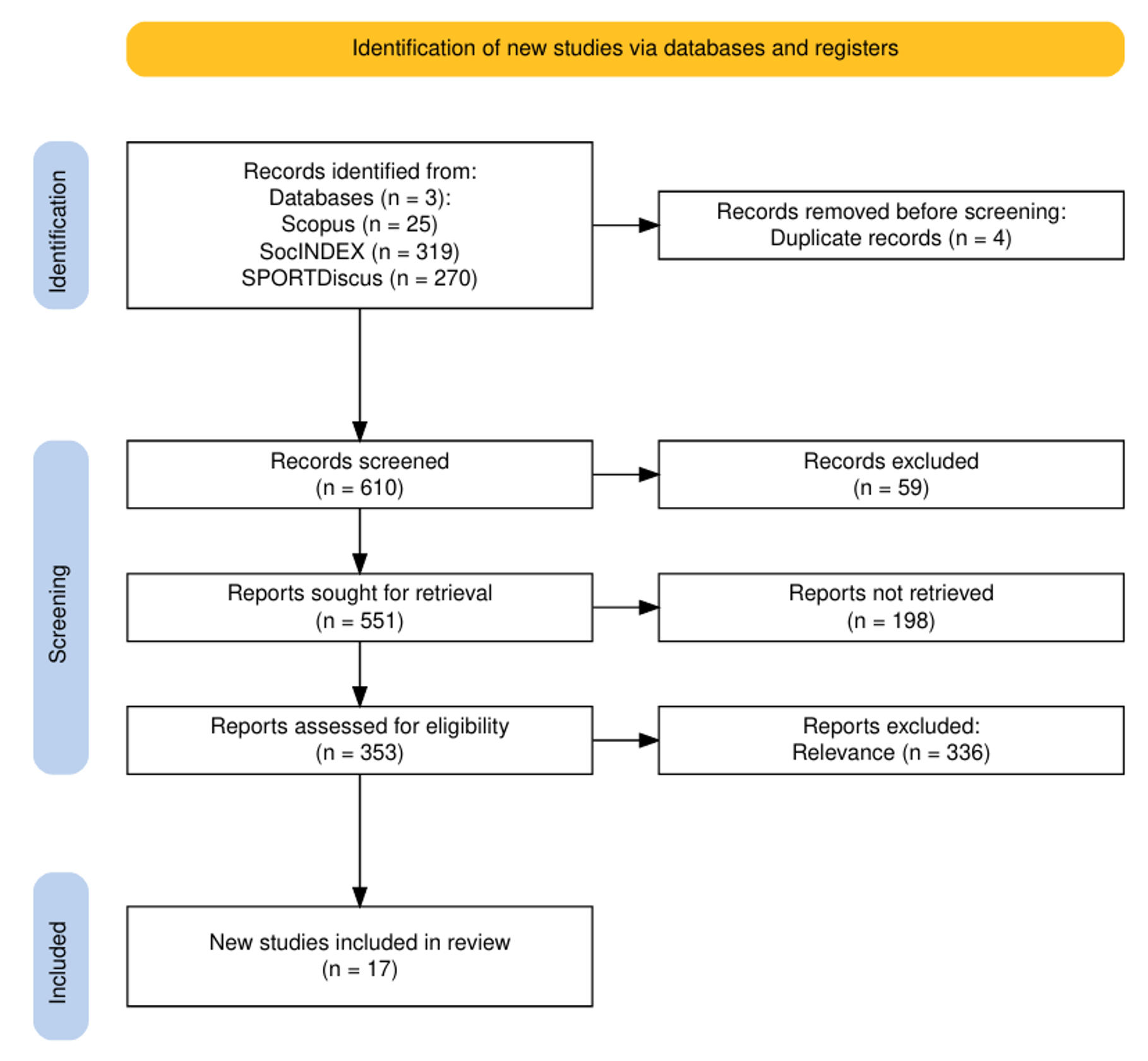
Note: PRISMA-SRc Flow diagram (Haddaway et al., 2022).
Thematic Analysis
The thematic analysis process is termed “systematic” due to its structured, sequential approach to interpreting research data (Naeem et al., 2023). The researchers used the data from the PRISMA-SRc Fow diagram (Figure 1) to analyze within the thematic analysis (Figure 2) to identify patterns and themes. Thematic analysis initially followed Braun and Clarke’s processes. Tentative coding was conducted manually, then reviewed by the second author to ensure reliability and trustworthiness. Codes were grouped into potential categories through iterative discussion and reflection guided by kaupapa Māori principles. In developing these codes and categories into themes, we also drew upon NPW to ensure culturally responsive alignment. Through this lens we determined heritage and preservation with whanaungatanga and tino rangatiratanga, shaped the theme of cultural revitalization. In addition, the codes related to navigating and overcoming challenges aligned with manaakitanga, bringing to life the need for culturally safe sport environments. Finally, codes and categories in relation to health integration and community-centered practice mapped with Māori values of kaitiakitanga and manaakitanga, underpinning holistic wellbeing and community engagement.
Figure 2 – A thematic approach was used in this study
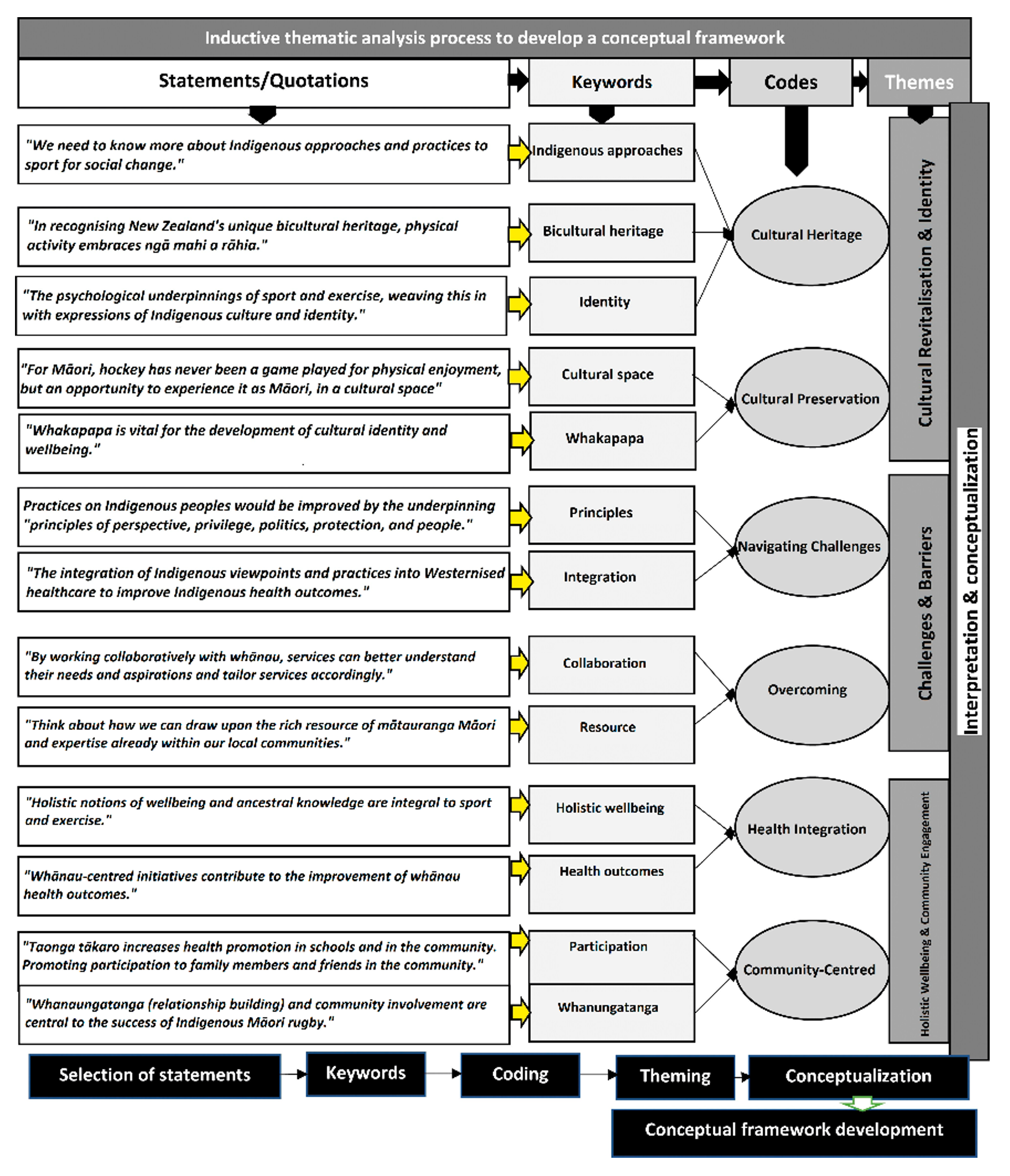
Note: A systematic thematic analysis process: A novel six-step process for conceptual model development in qualitative research (Naeem et al., 2023).
Thematic analysis of the 17 studies from the PRISMA-SRc Flow diagram, to identify key patterns, trend and representative quotes aligned with the research objectives. Recurring terms and visual elements were then identified and designated into 13 keywords, forming the foundation of systematic coding (Naeem et al., 2023). These keywords or codes (tangata) were synthesized into 6 categories (whanau) which included Cultural Heritage, Cultural Preservation, Navigating Challenges, Overcoming, Health Integration, and Community-centered, based on shared patterns within the data. This analysis was then progressed to a more culturally meaningful level by interpreting the sub-themes (Hapū) through kaupapa Māori and deductive mapping aligned with NPW (Hapeta et al, 2019). This process resulted in three overarching themes (Iwi) being selected. Cultural Revitalization and Identity, Challenges and Barriers, and Holistic Wellbeing and Community Engagement. Which informed the development of a conceptual model to address the research question (Naeem et al., 2023).
Ethics and Dissemination
As this review did not involve primary data collection, it did not require ethical approval. All sources were secondary (Gratton & Jones, 2010; Onwuegbuzie & Frels, 2016), thus publicly available with no human subjects involved. Moreover, as the study is based on such publicly available sources, informed consent was not applicable. Additionally, the authors declare no conflicts of interest. Further, this research received no grants from any funding agency in the public, commercial, or not-for-profit sectors. The data in this scoping review is available through peer-reviewed journal publications, and efforts have been made to ensure the results are accessible to broader audiences, including researchers, practitioners and policymakers. Finally, the review is deliberately published in an open-access journal to promote transparency and wider dissemination.
RESULTS AND FINDINGS
Understanding the existing evidence on SFD is crucial for informing policy and Māori-led initiatives. While Māori-focused SFD programs have increased, a comprehensive review of the literature is lacking. Addressing this gap, our review synthesizes three thematic patterns within Māori-focused SFD scholarship. As shown in Table 1, 17 articles identified through the search strategy explored various aspects of SFD for Māori in Aotearoa NZ. All studies included were published between 2007 – 2024. Of the 17 publications identified, 16 employed a qualitative approach, while one article (Ross & Hamlin, 2007) used a review methodology and 12 studies employed KMT as a guiding theoretical framework (Hiha, 2016).
Table 1 – Results Summary
| Author/s Year | Title | Objective/Aim | Methods/Theory | Geographical region | Key points |
| Brown, 2013 | Poi Toa: A Short History Ngā Tāonga Tākaro | To explore how ngā taonga tākaro are becoming transformative agents in health, sport, and education. | Qualitative: collecting and analyzing narratives | Aotearoa, New Zealand | Ngā tāonga tākaro are transformative agents in health, sport, and education. This highlights their cultural significance, which aligns with Māori values and practices. |
| Erueti & Palmer, 2014 | Te Whariki Tuakiri (the identity mat): Māori elite athletes and the expression of ethno-cultural identity in global sport. | To explore how Māori elite athletes express and navigate their ethnocultural identity within the context of global sport. | Qualitative: KMT, critical race theory, and narrative inquiry. In-depth interviews and case studies. | Aotearoa, New Zealand | Māori athletes encounter Māori athletes face challenges in expressing their cultural identity in global sports but find ways to assert it and use cultural support systems along with Indigenous knowledge to stay true to their roots. |
| Hapeta et al., 2019 | Sport for Social Change with Aotearoa New Zealand Youth: Navigating the Theory-Practice Nexus through Indigenous Principles | To highlight how Indigenous worldviews and practices can inform and enhance social change initiatives that target Indigenous youth in New Zealand. | Qualitative; KMT. Indigenous philosophical paradigms, relational ontology | Aotearoa, New Zealand | Using KMT enhances sport for social change initiatives, making them more culturally relevant and impactful for Indigenous youth in New Zealand. |
| Henwood & Whāriki, 2007 | Māori knowledge: A Key Ingredient in Nutrition and Physical Exercise Health Promotion Programs for Māori | To demonstrate how Māori knowledge and cultural practices can be integrated into nutrition and physical activity programs to improve health outcomes for Māori. | Qualitative; KMT | Aotearoa, New Zealand | Integrating Māori knowledge and cultural practices into physical activity programs significantly improves engagement and health outcomes for Māori communities. |
| Manuel, 2015 | Overview of a current initiative: Tāonga Tākaro in schools. | To explore how the revitalization of ngā tāonga tākaro can inspire new ways of thinking and action within educational settings. | Qualitative: collecting and analyzing narratives. | Aotearoa, New Zealand | Integrating ngā tāonga tākaro into school curricula revitalizes Māori culture, promotes holistic well-being, and strengthens connections to Māori heritage and values. Community engagement and leadership play crucial roles. |
| McCausland-Durie, 2007 | Are we retaining our Māori talent? Representative youth netballers. | To identify influencing factors on the retention of Māori female youth in representative netball, focusing on intrapersonal, interpersonal, and structural elements. Strategies are sought to enhance retention. | Qualitative; KMT. Semi-structured interviews. | Aotearoa, New Zealand | The retention of talented Māori female youth in representative netball is influenced by a complex interplay of intrapersonal, interpersonal, and structural factors, all underpinned by cultural elements. |
| Muriwai et al., 2023 | Māori exercise professionals: Using Indigenous knowledge to connect the space between performance and wellbeing. | To analyze how Māori exercise professionals use Indigenous knowledge to link performance in sport with holistic wellbeing. It displays perspectives of Māori experts on how their cultural practices improve athletic excellence and community health. | Qualitative; KMT. Insider research design. | Aotearoa, New Zealand | The “space between” model is supported, integrating ancestral knowledge and holistic wellbeing in sport. It also identifies the role of Māori professionals in challenging racism and barriers, highlighting Indigenous sport leadership. |
| Nelson et al, 2023 | Te Papa Tākaro o te Tuakiri: The field of Identity in Indigenous Māori Rugby. | To explore how Otago Māori Rugby incorporates Māori values to enhance Māori identity and wellbeing. | Qualitative; KMT. Semi-structured interviews. | Aotearoa, New Zealand | The study also highlighted the importance of whānau (extended family structure) and community involvement in supporting these athletes. Additionally, providing safe avenues for rangatahi (youth) to engage in rugby is crucial for maintaining cultural values and fostering a powerful sense of identity. |
| Palmer et al., 2023 | “He ringa raupā – Calloused hands”: Negotiating the intersections and responsibilities as sport practitioners and academics in Aotearoa. | To explore the challenges and responsibilities faced by Indigenous and non-Indigenous sport practitioners and academics in New Zealand. | Qualitative; KMT. Ringa Raupā model, which is a reflective tool | Aotearoa, New Zealand | Indigenous voices are often underrepresented in sport management and academia, making it difficult to hear their perspectives and experiences. In addition, stresses the need for sport practitioners to be responsive to the provisions and principles of Te Tiriti o Waitangi, ensuring that Indigenous perspectives are respected and integrated. |
| Reweti, 2023 | Understanding how whānau-centered initiatives can improve Māori health in Aotearoa New Zealand. | To highlight the significance of prioritizing Indigenous voices and knowledge systems in health promotion. | Qualitative: KMT. Tū kahikatea framework. | Aotearoa, New Zealand | The article found that whānau-centered initiatives significantly enhanced health outcomes. These initiatives were known to embed Māori values and practices which were essential for addressing health inequities and promoting holistic wellbeing. |
| Reweti, Severinsen & Smith, 2022 | Waka ama: An exemplar of Indigenous health promotion in Aotearoa New Zealand. | To highlight how Waka ama (outrigger canoeing) serves as an effective model for indigenous health promotion. | Qualitative; KMT. Te Pae Māhutonga framework. | Aotearoa, New Zealand | The findings of this study emphasized the importance of Māori values such as whanaungatanga (building and maintaining relationships), manaakitanga (generosity and care for others), and kaitiakitanga (guardianship) in enhancing community wellbeing. |
| Ross & Hamlin, 2007 | Māori physical activity: A review of an Indigenous population’s participation | To examine the prevalence of physical activity among Māori in New Zealand. | Review methodology/ data analysis, national surveys. | Aotearoa, New Zealand | The article found that 60% of Māori males and 51% of Māori females are active, comparable to European New Zealanders and higher than most Indigenous populations globally, except Canada. Socio-economic and environmental factors significantly influence Māori physical activity levels. |
| Ryan, 2007 | Few and Far Between: Māori and Pacific Contributions to New Zealand Cricket. | To explore and highlight the historical and contemporary contributions of Māori and Pacific peoples in New Zealand cricket. | Qualitative; Historical analysis, interviews, and case studies. | Aotearoa, New Zealand | Māori and Pacific communities remain significantly underrepresented in cricket in New Zealand. This article highlights the need to recognize and include Māori and Pacific players, coaches, and administrators to reflect the diverse society of New Zealand. |
| Thomas et al., 2024 | Māori and Field Hockey from 1900: More than a Game? | To provide a historical overview of the participation of Māori in field hockey in Aotearoa New Zealand. It examines the role of field hockey in maintaining Māori kinship and culture, from its introduction at boarding schools to the annual Māori hockey tournament in modern times. | Qualitative; Historical overview. | Aotearoa, New Zealand | This study highlighted the sport’s role in maintaining Māori kinship and culture, particularly through the annual Māori hockey tournament. These findings emphasize the significance of field hockey in cultural preservation and community building for Māori. |
| Thompson, 2008 | Do Māori initiatives by Māori and for Māori really help Māori? | To critically examine a specific Rangatahi life-skills program, designed and delivered by Māori for Māori, to determine whether such initiatives support and empower Māori youth. | Qualitative; KMT | Aotearoa, New Zealand | The study evaluates the Hokowhitu program, a Māori-led initiative using sport and life-skills training to support Rangatahi, asking whether such programs empower Māori. |
| Thorpe, Brice & Rolleston., 2020 | Decolonizing Sport Science: High Performance Sport, Indigenous Cultures, and Women’s Rugby | To explore how Māori and Samoan players navigate cultural value systems within high-performance sport environments, integrating Indigenous knowledge and practices into their training and everyday lives. | Qualitative: Thematic analysis or semi-structured interviews. | Aotearoa, New Zealand | Māori and Samoan players from the Black Ferns Sevens squad integrate Indigenous knowledge into their training while navigating cultural values in high-performance sport. It also highlights systemic barriers and vulnerabilities faced by Indigenous athletes, calling for more research focused on Indigenous women in high-performance sport. |
| Whitinui, 2021 | Decolonizing Sports Sociology is a “Verb not a Noun”: Indigenizing our way to reconciliation and Inclusion in the 21stCentury? Alan Ongham Memorial Lecture. | To share four views, contributions, and opportunities that sports sociologists might consider useful in how to decolonize as well as indigenize the discipline of sports sociology. | Qualitative; KMT | Aotearoa, New Zealand | Decolonizing sports sociology
Involves actively challenging existing structures and building good relations with Indigenous people by respecting their knowledge, practices, and perspectives. |
Of the 17 articles, several discussed various initiatives or programs using sport to support Māori aspirations. Two articles emphasized the revival and promotion of traditional Māori games, known as Ngā Tāonga Tākaro (Brown, 2013; Manuel, 2015) highlighting efforts to integrate indigenous knowledge in education, ensuring that younger generations understood their culture. Another five articles explored how Māori values and practices were incorporated into sports and how they strengthened cultural identity and heritage (Nelson et al., 2023; Reweti & Severinsen, 2022; Ryan, 2007; Thomas et al., 2024; Thorpe et al., 2020). Additionally, McCausland-Durie (2007) explored cultural factors related to the retention and well-being of Māori youth in Netball, highlighting the importance of cultural identity in retention strategies. Three articles recognized the importance of community and cultural identity in fostering the well-being and achievement in sports and academia (Hapeta et al., 2019; Palmer et al., 2023; Whitinui, 2021). Another study (Reweti, 2023) on whānau-centered initiatives aimed at improving Māori health in Aotearoa NZ found that embedding Māori values and practices was essential for addressing health inequities and promoting holistic wellbeing. A topic supported by Henwood and Whāriki (2007) who demonstrated the value of integrating Māori knowledge into physical activity programs, while Thompson (2008) showed Māori-led sport initiatives empowered Rangatahi (youth).
Further, Ross and Hamlin’s (2007) review of the prevalence of physical activity among Māori in New Zealand illustrated a comprehensive approach to improving Māori health and physical activity by leveraging Indigenous knowledge, community engagement, and holistic practices. Two studies (Erueti & Palmer, 2014; Muriwai et al., 2023) recognized the significant contributions of Māori to sports, despite challenges such as under-representation and cultural barriers. Erueti and Palmer (2014) explored how Māori express their ethnocultural identity within elite-level sport, meanwhile Muriwai et al. (2023) examined how Māori exercise professionals used indigenous knowledge to connect sport performance with holistic wellbeing. Additionally, Whitinui’s (2021) calls for greater recognition and inclusion of Māori cultural practices in mainstream sports, intended to promote equity and celebrate diversity in sport sociology.
Applying the NPW analytical lens enhanced the visibility of Māori values within SFD initiatives (See Table 2). Indeed, Hapeta et al. (2019) argue that NPW processes can expose the presence or absence of expressions of Māori culture in sport. With this analytical lens applied, whanaungatanga and manaakitanga appeared in program contexts, whakapapa was a key contributor towards identity, kaitiakitanga emerged in place-based activities such as waka ama, meanwhile rangatiratanga and wairuatanga appeared less consistently.
Table 2 – Ngā Poutama Whetū (NPW)
| Author/s (Year) | Title (kaupapa) | Tangata (concepts) | Whānau (codes) | Hapū (category) | Iwi (theme) |
| Brown, 2013 | Poi Toa: A Short History Ngā Tāonga Tākaro | Ngā Tāonga Tākaro; Mātauranga Māori; Identity; Hauora | Revitalizing traditional play; School integration; Language/culture normalization; Community participation | Cultural Practice | Cultural Revitalization & Identity |
| Erueti & Palmer, 2014 | Te Whariki Tuakiri (the identity mat): Māori elite athletes and the expression of ethno-cultural identity in global sport. | Ethno‑cultural identity; Global sport; Indigenous knowledge; Resistance | Identity navigation under pressure; Use of cultural support systems; Countering assimilation; Role-modelling | High‑Performance Identity | Challenges & Barriers |
| Hapeta et al., 2019 | Sport for Social Change with Aotearoa New Zealand Youth: Navigating the Theory-Practice Nexus through Indigenous Principles
|
Kaupapa Māori; Rangatahi; Theory–practice nexus; Indigenous principles | By‑with‑for Māori design; Relational ontology; Culturally safe delivery; Practice implications | Social Change | Holistic Wellbeing & Community Engagement |
| Henwood & Whāriki, 2007 | Māori knowledge: A Key Ingredient in Nutrition and Physical Exercise Health Promotion Programs for Māori | Mātauranga Māori; Health promotion; Engagement; Equity | Embedding tikanga; Improved uptake; Community co‑design; Culturally anchored messaging | Health Promotion | Holistic Wellbeing & Community Engagement |
| Manuel, 2015 | Overview of a current initiative: Tāonga Tākaro in schools. | Traditional games; Education; Whanaungatanga; Holistic learning | Curriculum embedding; Teacher capability; Whānau involvement; Identity affirmation | School‑based Practice | Cultural Revitalization & Identity |
| McCausland-Durie, 2007
|
Are we retaining our Māori talent? Representative youth netballers. | Retention; Intra/interpersonal factors; Structures; Culture | Barriers to retention; Cultural fit; Support networks; Pathway clarity | Talent Pathways | Challenges & Barriers |
| Muriwai et al., 2023 | Māori exercise professionals: Using Indigenous knowledge to connect the space between performance and wellbeing. | Indigenous leadership; Hauora–performance bridge; Anti‑racism practice; Tikanga | Practitioner‑led change; Culturally safe spaces; Community impact; Challenging systems | Professional Practice | Holistic Wellbeing & Community Engagement |
| Nelson et al, 2023 | Te Papa Tākaro o te Tuakiri: The field of Identity in Indigenous Māori Rugby. | Māori rugby; Identity formation; Whānau; Tikanga | Whānau‑centered rugby culture; Safe avenues for rangatahi; Language in practice; Place‑based belonging | Community Rugby | Cultural Revitalization & Identity |
| Palmer et al., 2023 | “He ringa raupā – Calloused hands”: Negotiating the intersections and responsibilities as sport practitioners and academics in Aotearoa. | Te Tiriti responsiveness; Institutional change; Indigenous voice; Accountability | Under‑representation; Co‑governance needs; Reflexive practice; Curriculum reform | Governance/Accountability | Challenges & Barriers |
| Reweti, 2023 | Understanding how whānau-centered initiatives can improve Māori health in Aotearoa New Zealand. | Whānau‑centered; Pro‑equity; Tikanga‑led; Systems | Improved outcomes; Community authority; Culturally anchored delivery; Data sovereignty | Whānau Ora | Holistic Wellbeing & Community Engagement |
| Reweti, Severinsen & Smith, 2022 | Waka ama: An exemplar of Indigenous health promotion in Aotearoa New Zealand. | Waka ama; Whanaungatanga; Manaakitanga; Kaitiakitanga | Intergenerational participation; Place‑based stewardship; Collective care; Cultural safety | Place‑Based Activity | Holistic Wellbeing & Community Engagement |
| Ross & Hamlin, 2007 | Māori physical activity: A review of an Indigenous population’s participation | Participation patterns; Determinants; Inequities; Surveillance | Sex/age differences; Socio‑environmental factors; Comparative context; Policy signals | Epidemiology | Challenges & Barriers |
| Ryan, 2007 | Few and Far Between: Māori and Pacific Contributions to New Zealand Cricket. | Representation; Historical analysis; Access; Inclusion | Underrepresentation; Pipeline gaps; Recognition; Cultural mismatch | Media/History | Challenges & Barriers |
| Thomas et al., 2024 | Māori and Field Hockey from 1900: More than a Game? | Kinship; Community tournaments; Cultural continuity; History | Annual Māori tournament; Intergenerational ties; Community pride; Cultural maintenance | Community History | Cultural Revitalization & Identity |
| Thompson, 2008 | Do Māori initiatives by Māori and for Māori really help Māori? | Māori‑led programs; Rangatahi; Empowerment; Evaluation | Life‑skills through sport; Cultural mentorship; Youth engagement; Empowerment outcomes | Māori‑Led SFD | Holistic Wellbeing & Community Engagement |
| Thorpe, Brice & Rolleston., 2020 | Decolonizing Sport Science: High Performance Sport, Indigenous Cultures, and Women’s Rugby | Decolonization; High performance; Indigenous women; Vulnerability | Cultural value tensions; Structural sexism/racism; Need for safe spaces; Research gaps | High‑Performance Systems | Challenges & Barriers |
| Whitinui, 2021 | Decolonizing Sports Sociology is a “Verb not a Noun”: Indigenizing our way to reconciliation and Inclusion in the 21st Century? Alan Ongham Memorial Lecture. | Indigenizing academia; Praxis; Relational ethics; Reconciliation | Challenging structures; Building relationships; Elevating Indigenous knowledge; Field reform | Disciplinary Change | Challenges & Barriers |
Using Arksey and O’Malley’s framework (2005) the review found three interrelated thematic domains underpinning preservation efforts: 1. Cultural Revitalization and Identity, 2. Challenges and barriers, and 3. Holistic Wellbeing and Community Engagement. This ‘hybrid’ approach made our thematic analysis more robust, as both epistemological positions were honored, and we were more familiar with the articles included. We identified our first theme, “cultural revitalization and identity,” through the codes “cultural heritage” and “cultural preservation.” The second theme, “challenges and barriers,” was derived from the codes “navigating challenges” and “overcoming.” Lastly, the codes “health integration” and “community-centered” formed our final theme, “holistic wellbeing and community engagement” (Braun & Clarke, 2006).
DISCUSSION
In Aotearoa NZ, the Waitangi Tribunal examines Māori claims on Te Tiriti o Waitangi breaches by the Crown, with its recommendations often contributing to settlements that support cultural revitalization (Waitangi Tribunal, 2015). Drawing on this broader socio-cultural political context, the following discussion critically examines the review’s findings to assess the scope and thematic focus of scholarship on Māori SFD programs in Aotearoa NZ. The literature converges on three themes: cultural revitalization and identity, challenges and barriers, and holistic wellbeing and community engagement. Within a KMT framework, whakapapa and tino rangatiratanga connect cultural revitalization, identity, and sport participation, critically positioning sport as a site to express and reaffirm Māori identity.
Simultaneously, the literature highlights how the enduring impacts of colonization continuously reproduce barriers through structural inequities and culturally misaligned SFD practices. Within this context, holistic wellbeing and community engagement emerge as a collective commitment informed by manaakitanga and whanaungatanga, framing sport as a potential pathway for strengthening hauora. Cultural revitalization is positioned as a protective mechanism with programs that center Māori values and reaffirm identity foundations that enhance retention, resilience and agency within sport environments (Brown, 2013; Manuel, 2015; Nelson et al., 2023). Taken together, these themes show that effective SFD initiatives are underpinned by Indigenous principles and Māori-led governance systems. Therefore, understanding the evidence on SFD is essential for shaping culturally grounded policy and practice. It illuminates both the challenges and successes associated with SFD program development while identifying potential gaps for future researchers to address. The extant evidence illustrates the role of sport and tāonga tākaro in promoting hauora Māori, cultural identity, and social change, emphasizing the importance of culturally relevant education and community engagement. Future research should expand database coverage or Māori-specific repositories, to capture a more comprehensive body of literature – a limitation of the present study.
Cultural Revitalization and Identity
Interpreted through KMT, sport functions as a relational site through which Māori identity is celebrated, expressed and protected. Literature consistently demonstrates that identity formation is grounded in whakapapa, challenging dominant SFD approaches that treat culture as a leaver for individual behavioral change. Instead, culture emerges as a method for meaningful connection, engagement, identity affirmation and wellbeing (Brown, 2013; Manuel, 2015; Nelson et al., 2023; Whitinui, 2012). Within this framing, ngā tāonga tākaro establishes an immersive pedagogy grounded in Mātauranga Māori (Indigenous knowledge) positioning Te Ao Māori as the foundation of learning and cultural continuity (Brown, 2013; Manuel, 2015).
Contemporary sport settings that embed Māori values such as te reo Māori, whakapapa and tikanga, positions identity as a lived ‘everyday practice’ that can reshape organisational culture and enhance wellbeing (Nelson et al., 2023). In high-performance environments, Māori athletes used their cultural identity as a protective layer against assimilative pressures, using indigenous knowledge and networks to remain grounded while navigating elite-level global sport demands (Erueti & Palmer, 2014; Thorpe et al., 2020).At the community level, participation in sports like cricket and hockey sustains whanaungatanga and whakapapa, reinforcing Māori identity through relational sport practice (Ryan, 2007; Thomas et al., 2024).
Together, these trends indicate a shift from the inclusion of indigenous culture in SFD towards approaches that ground sport in Indigenous knowledge and relationships (Whitinui, 2021). When considered across these contexts, the diversity of mechanisms is shown to converge toward a shared outcome. Culturally immersive approaches such as ngā tāonga tākaro prioritize cultural transmission and pedagogy, while such approaches also embed Māori values into PARS to reshape existing norms and decision-making processes.
Both pathways can influence identity, retention and resilience, provided that Māori values are authentic, not tokenistic, enacted in tikanga, te reo and whakapapa along with rangatiratanga across programme design and delivery (Brown, 2013; Manuel, 2015; Nelson et al., 2023). Overall, the evidence indicates a decisive shift in the SFD field from the inclusion of indigenous culture within programs towards the grounding of sport in Indigenous knowledge and relationships (Whitinui, 2021). This reframing positions identity as a collective, place-based practice deeply embedded in culture. For SFD, this signals a cultural revitalization that is not ancillary to development outcomes, but central to their production, with sport (PARS) serving as the vehicle for language revival, belonging, authority and cultural continuity, extending beyond the individual behavior change paradigm alone.
Challenges and barriers
Through a KMT lens, barriers were understood as structural, systematic power relations requiring a return of rangatiratanga (self-determination) and institutional commitment to Te Tiriti Waitangi. The evidence is clear in terms of systemic funding inequities, governance and policy development that centers westernized norms, while marginalizing Māori voices and enabling institutional racism (Erueti & Palmer, 2014; Palmer et al., 2023; Thorpe et al., 2020). This theme manifested across contexts. In high performance sport, identity pressures and assimilative demands marginalized te reo Māori, tikanga Māori and decision-making, requiring athletes to assert identity strategically while drawing on Indigenous support systems (Erueti & Palmer, 2014; Thorpe et al., 2020). Women’s and youth sport participation and retention can be theorized as outcomes of layered vulnerabilities through a dynamic intersection of intrapersonal, interpersonal, and structural influences (McCausland-Durie, 2007; Thorpe et al., 2020).
Organizational, commitments to Te Tiriti o Waitangi were frequently inconsistent or are merely symbolic when not accompanied by power-sharing, resources and accountability, with practitioners and scholars emphasizing the need for co-governance and Māori-led design (Hapeta et al., 2019; Palmer et al., 2023). In professional practice, Māori fitness professionals apply Mātauranga Māori to close gaps between performance and wellbeing and challenge racism in everyday settings (Muriwai et al., 2023). A persistent gap was evident between discourses of inclusion and meaningful structural change. Without equitable resourcing for Māori-led design, delivery and evaluation, SFD programs risk reinforcing the inequities it aims to address.
Furthermore, significant gaps revealed Indigenous women remain underrepresented in high-performance sport scholarship and gendered power dynamics receives insufficient analysis (Thorpe et al., 2020). These gaps matter for policy and practice because they determine whose experiences inform decision-making, whose knowledge is recognized, and how success is defined. What this theme claims about the SFD field is that effective programming is inseparable from constitutional and organisational reform. Programs that embed tino rangatiratanga are better positioned to foster identity and wellbeing for Māori, whereas initiatives grounded in symbolic inclusion struggle in generating sustained impact (Hapeta et al., 2019; Palmer et al., 2023). The barriers are understood as systemic rather community-based, requiring shifts towards power and accountability beyond programme design alone.
Holistic Wellbeing and Community Engagement
Health enhancement and community-centered practice are interpreted through manaakitanga and kaitiakitanga, emphasizing reciprocal care and guardianship positioning hauora as relational and collective. Extant scholarship reframes success from participation or performance indicators to community wellbeing, cultural sustainability and Māori data sovereignty as outcomes that underpin long-term engagement (Brown, 2013; Manuel, 2015; Muriwai et al., 2023). Across diverse contexts, Māori exercise professionals utilize Mātauranga Māori to connect athletic performance with hauora, displaying how tikanga and cultural practice enhance community wellbeing (Muriwai et al., 2023). Cultural sport programs such as ngā tāonga tākaro are presented as transformative interventions for health, where learning is embedded within te reo, tikanga Māori and whakapapa (Brown, 2013; Manuel, 2015; Reweti & Severinsen, 2022). Māori values woven into team, organisational and program design strengthen identity and wellbeing and cultural sustainability. This includes the adaptation of colonial sports, like hockey and cricket, which attempt to reconnect participation with whakapapa (Ryan, 2007; Nelson et al., 2023; Thomas et al., 2024). Across youth development and health promotion, KMT consistently uplifts Indigenous knowledge visibility and voices, strengthening cultural relevance and impact (Hapeta et al., 2019; Hiha, 2016; Mane, 2009; Reweti, 2023).
Two recurring patterns emerged; first sport is not a neutral domain. Without meaningful incorporation of rangatiratanga, tikanga, and identity, it sustains colonial power structures even while claiming inclusive aspirations (Erueti & Palmer, 2014; Thorpe et al., 2020). Second, the literature identifies a gap whereby conventional SFD metrics, focused on participation numbers and short-term performance outcomes, fail to capture what indicators matter most to Māori communities, including identity, language, whānau-centered wellbeing, and community control over knowledge (Brown, 2013; Manuel, 2015; Muriwai et al., 2023). Studies that center manaakitanga and kaitiakitanga demonstrate stronger alignment between program intentions and Māori conceptions of success. This points to a wider shift in the field, reframing SFD as a technical intervention towards a relational, culturally grounded approach that centers tino rangatiratanga. Lasting impact is generated through relationships; Te Tiriti partnerships built on co-design and delivery along with monitoring and evaluation by, with and for Māori communities (Hapeta et al., 2019; Palmer et al., 2023). From this perspective, sport can be a platform for cultural expression and collective wellbeing when Māori holds authority and accountability.
Strengths
A major strength of this review is its epistemological coherence. The integration of KMT and the NPW analytical lens strengthened its cultural relevance which positions a ‘te ao Māori’ worldview as the foundation for guiding interpretation. The use of two reviewers at key stages strengthens credibility and reliability, while the structured ‘hybrid’ thematic analysis enhances clarity. The review moves beyond descriptive mapping by offering interpretive synthesis embedded in Māori concepts such as whakapapa, whanaungatanga, manaakitanga, and rangatiratanga. This culturally responsive approach encourages greater understanding of how sport functions as a cultural, relational and political site, rather than an intervention mechanism. Focusing specifically on Māori in Aotearoa NZ provides critical contextual depth, supporting Tiriti-based analysis and interrogation of colonization, governance and systemic inequities that may be less visible in wider SFD literature.
Limitations
Several limitations need acknowledgment. The dominance of qualitative research reflects the current state of Māori-centered SFD scholarship while limiting comparison through conventional effectiveness metrics. However, this limitation also reveals a deeper epistemological tension, as dominant quantitative paradigms routinely marginalize outcomes that represent Māori-defined outcomes including identity security, cultural continuity and whānau wellbeing. Additionally, the review draws on three major academic databases in Scopus, SocINDEX and SPORTDiscus. While appropriate for sport and social science research, this strategy may have excluded Māori-led scholarship produced through iwi, kaupapa Māori journals, and other Indigenous community repositories that sit outside the scope of indexed mainstream databases. This limitation reveals structural exclusions within academic practices, rather than gaps in mātauranga Māori. Finally, the specific focus on Māori in Aotearoa NZ limits broader generalization across global Indigenous contexts, this focus could also be argued as a methodological strength as it resists harmful pan-Indigenous generalizations and centers place-based, analysis informed by Te Tiriti o Waitangi.
Gaps in Literature
This review reinforces the significant role sport plays in nurturing cultural revitalization, strengthening identity and enhancing hauora for Māori. These outcomes are mostly evident within Māori-led initiatives that embed whakapapa, whanaungatanga, manaakitanga and tino rangatiratanga. Despite indications across SFD initiatives, evidence of structural inequities and culturally misaligned practices continue to reduce what these programs look to achieve. Future research therefore must go beyond identifying barriers to critically examining the conditions, models and governing systems that enable Māori to thrive. To progress meaningfully, this SFD field must be culturally grounded, adopting approaches that are responsive to the diverse realities across indigenous populations. Several areas of inquiry are essential for strengthening the evidence base. Longitudinal research that captures the impact of whānau-centered initiatives on health outcomes, moving beyond short-term evaluations, which reflect intergenerational or collective benefits. Comparative studies exploring Ngā Tāonga Tākaro, alongside mainstream sport could also help clarify respective contributions to how culturally grounded practices may offer benefits for Māori or other Indigenous communities.
Future exploration of co-governance and (Māori-led) funding models is also required to evaluate how decisions are made along with resource allocation and accountability structures shaping the success of programs and community outcomes. There remains limited evidence regarding effective strategies for engaging Indigenous communities in SFD in ways that uphold cultural values and promote holistic wellbeing. Broadening research on the application of KMT or other Indigenous standpoint theories across various environments is crucial for clarifying how they may contribute to social change and transformation strengthening community connection. Overall, these directions offer a pathway towards a more robust and culturally grounded understanding of how SFD can support Hauora and community engagement for Māori and other Indigenous communities.
Implications
Policy Implications
There are crucial implications for policy that governs SFD initiatives, especially those looking to uphold Te Tiriti o Waitangi and support Māori wellbeing. This requires a paradigm shift from symbolic recognition of Tiriti principles towards decision making that upholds tino rangatiratanga. Embedding NPW analysis across commissioning, co-design, delivery and monitoring would make Māori values more visible. In addition, specify whanaungatanga and manaakitanga processes from whānau engagement to tikanga-based safety. Protect rangatiratanga through co-governance and data-sovereignty. Support kaitiakitanga through place-based design and resourcing. Furthermore, recognize wairuatanga as an aspect of wellbeing where it is culturally grounded. Policy frameworks should mandate co-governance arrangements that enables Māori decision-making authority, rather than limiting Māori involvement to consultation. As the literature indicated, without power-sharing and adequate resourcing, commitments to Te Tiriti o Waitangi risk remaining rhetorical (Palmer et al., 2023). Furthermore, policy must explicitly acknowledge wairuatanga as a valid and culturally grounded dimension of wellbeing, ensuring that hauora Māori are not constrained by narrow biomedical definitions.
Practice Implications
SFD program design with Māori must be underpinned by tikanga, resourcing initiatives that ground whanaungatanga, manaakitanga, kaitiakitanga, and te reo Māori, which moves beyond symbolism. This requires investment in practices that enable whānau engagement, culturally grounded processes, and place-based approaches that are shaped by local histories and environments. Strengthening cultural safety and anti-racism capabilities across SFD workforce, with particular attention to high-performance environments Where power-sharing remains asymmetrical and assimilative norms are entrenched. Practitioners must be supported to critically assess how organisational norms, coaching practices and evaluative frameworks reproduce inequities, to develop competencies that uphold Māori identity language and way of being in everyday practice.
System Implications
At systems level, this review emphasizes the importance of structural change in funding, accountability and knowledge governance. Equitable funding systems are needed that prioritize Māori-defined outcomes including cultural identity, revitalization, and collective wellbeing, rather than privileging participation metrics or short-term performance indicators. This requires aligning Monitoring and Evaluation (M&E) reporting requirements with Māori aspirations while ensuring resourcing models do not undermine Māori-led initiatives through excessive administrative demands. Māori data sovereignty must be embedded within M&E frameworks, protecting community rights to govern how data is accessed, interpreted and used.
Finally, long-term investment is required, moving away from short term funding cycles toward multi-year commitments that recognize identity development and wellbeing outcomes (Hapeta et al., 2019). Collectively, these shifts would move the SFD sector beyond descriptive acknowledgement of inequities towards transformational change that supports Māori aspirations and self-determination. Beyond ethical considerations, this is essential to ensure evidence reflects accountability and responsibility to Māori communities. Sustained, long-term investment is important as identity development, cultural revitalization, and wellbeing outcomes unfold over time rather than within short funding cycles (Hapeta et al., 2019). Collectively, these implications move beyond descriptive recognition of inequities toward structural transformation, which is essential if SFD is to support Māori in Aotearoa NZ.
CONCLUSION
The significance that SFD plays in fostering Māori cultural revitalization, identity, and overall wellbeing in Aotearoa NZ is recognized by the findings in this scoping review. Together, three themes demonstrated that SFD initiatives for Māori are most effective when grounded in Indigenous governance, relational practice, and holistic conceptions of wellbeing. Practice and policy, particularly through ngā tāonga tākaro, supports hauora and cultural identity. Importantly, barriers to participation and enhancing wellbeing are not located with Māori communities but are found in structural conditions shaped by colonization, governance arrangements and inequitable resource distribution. By synthesizing the existing literature through a critical KMT analysis, this review provides a foundation to inform policy, practice and future research. It also highlights clear opportunities to strengthen the SFD field through Māori-led governance, longitudinal research, monitoring and evaluation frameworks grounded in Māori-defined measures and indicators of success.
Recommendations
According to these findings, several recommendations are proposed for policy, practice, and research. At the policy level, SFD programs in Aotearoa NZ should be grounded in Te Tiriti o Waitangi, with co-governance arrangements that ensure Māori authority in decision-making, funding allocation, and accountability processes. Longer-term funding cycles are necessary as identity development and wellbeing outcomes cannot be achieved within shorter timeframes. For practice, SFD programs should embed tikanga Māori, te reo Māori and whānau-centered approaches across design, delivery and M&E. Future research should examine longitudinal, Māori-led designs, expanding the use of Indigenous M&E and center Māori-defined indicators of success. Strengthening Māori authority to control data, must be an essential component for such M&E processes.
Final Thoughts
This scoping review plays a vital role in the field of SFD by demonstrating that sport can indeed function as a powerful tool for cultural revitalization, wellbeing, and self-determination when Mātauranga Māori and authority are prioritized. In privileging a kaupapa Māori approach, it challenges deficit and culturally ‘neutral’ SFD models and argues that Indigenous research methodologies are critical to ensuring equitable and sustainable outcomes. Thus, this review plays an integral part in Indigenizing the academy by synthesizing Māori-centered SFD scholarship. We close by reinforcing a paradigm shift, from symbolic inclusion to structural transformation, is required whereby Māori (and Indigenous) values, governance and aspirations can help to shape a flourishing future for SFD in Aotearoa NZ.
REFERENCES
Arksey, H., & O’Malley, L. (2005). Scoping studies: Towards a methodological framework. International Journal of Social Research Methodology, 8(1), 19–32. https://doi.org/10.1080/1364557032000119616
Braun, V., & Clarke, V. (2006). Using thematic analysis in psychology. Qualitative Research in Psychology, 3(2), 77–101. https://doi.org/10.1191/1478088706qp063oa
Brown, H. (2013). Poi Toa: A Short History Ngā Tāonga Tākaro.
Crotty, M. (1998). The foundations of social research: Meaning and perspective in the research process. SAGE Publications.
Coalter, F. (2010). The politics of sport-for-development: Limited focus programs and broad-gauge problems? International Review for The Sociology of Sport – INT REV SOCIOL SPORT, 45, 295–314. https://doi.org/10.1177/1012690210366791
Daudt, H. M., van Mossel, C., & Scott, S. J. (2013). Enhancing the scoping study methodology: A large, inter-professional team’s experience with Arksey and O’Malley’s framework. BMC Medical Research Methodology, 13(1), 48. https://doi.org/10.1186/1471-2288-13-48
Erueti, & Palmer. (2014). Te Whariki Tuakiri (the identity mat): Māori elite athletes and the expression of ethno-cultural identity in global sport. Sport in Society, 17(8), 1061–1075. https://doi.org/10.1080/17430437.2013.838351
Gratton, C. & Jones, I. (2010). Research methods for sports studies (2nd ed.).
Haddaway, N. R., Page, M. J., Pritchard, C. C., & McGuinness, L. A. (2022). PRISMA2020: An R package and Shiny app for producing PRISMA 2020-compliant flow diagrams, with interactivity for optimized digital transparency and Open Synthesis. Campbell Systematic Reviews, 18(2), e1230. https://doi.org/10.1002/cl2.1230
Hapeta, J., Stewart-Withers, R., & Palmer, F. (2019). Sport for Social Change with Aotearoa New Zealand Youth: Navigating the Theory–Practice Nexus Through Indigenous Principles. Journal of Sport Management, 33(5), 481–492. https://doi.org/10.1123/jsm.2018-0246
Hapeta, J., Palmer, F., Kuroda, Yusuke, & Hermansson, G. (2019). A Kaupapa Māori, culturally progressive, narrative review of literature on sport, ethnicity, and inclusion. Kōtuitui: New Zealand Journal of Social Sciences Online, 14(2), 209-229. https://doi.org/10.1080/1177083x.2019.1600558
Henwood, W., & Whāriki, T. R. (2007). Māori Knowledge: A Key Ingredient in Nutrition and Physical Exercise Health Promotion Programs for Māori. Social Policy Journal of New Zealand, 32, 155–164.
He Oranga Poutama. (2022). He Oranga Poutama expanded into four new regions [Web page]. He Oranga Poutama Expanded into Four New Regions. https://www.beehive.govt.nz/release/he-oranga-poutama-expanded-four-new-regions
Hiha, A. (2016). Kaupapa Māori Methodology: Trusting the Methodology Through Thick and Thin. The Australian Journal of Indigenous Education, 45(2), Article 2. https://doi.org/10.1017/jie.2015.30
KTV Consulting. (2017). Retrieved April 16, 2025, from https://sportnz.org.nz/media/1436/maori-participation-review-report.pdf.
Levac, D., Colquhoun, H., & O’Brien, K. K. (2010). Scoping studies: Advancing the methodology. Implementation Science, 5(1), 69. https://doi.org/10.1186/1748-5908-5-69
Mane, J. (2009). Kaupapa Māori, a community approach.
Manuel, B. (2015). Overview of a current initiative: Tāonga tākaro in schools. New Zealand Physical Educator, 48(1), 5. https://search.informit.org/doi/abs/10.3316/informit.874566955115079
McCausland-Durie. (2007). Are we retaining our Māori talent? Representative youth netballers: A thesis presented in partial fulfilment of the requirements for the degree of Master of Education at Massey University. https://mro.massey.ac.nz/items/c65654e4-57dd-4d73-a5f5-05645b81490a
Ministry of Health NZ. (2020, July 31). Ministry of Health NZ. https://www.health.govt.nz/publications/whakamaua-maori-health-action-plan-2020-2025
Ministry of Health NZ. (2024, December 19). https://www.health.govt.nz/maori-health/wai-2575-health-services-and-outcomes-inquiry
Muriwai, E., Manuela, S., Cartwright, C., & Rowe, L. (2023). Māori exercise professionals: Using Indigenous knowledge to connect the space between performance and wellbeing. Journal of Applied Sport Psychology, 35(1), 83–109. https://doi.org/10.1080/10413200.2022.2075982
Naeem, Ozuem, Howell, & Ranfagni. (2023). A Step-by-Step Process of Thematic Analysis to Develop a Conceptual Model in Qualitative Research. 22, 1–18. https://doi.org/10.1177/16094069231205
Nelson, J., Jackson, A.-M., Phillips, C., Poa, D., & Skelton, T. K. (2023). Te Papa Tākaro o te Tuakiri: The Field of Identity in Indigenous Māori Rugby. Journal of Sport for Development, 11(1). Scopus.
Onwuegbuzie, A. J., & Frels, R. (2016). Seven steps to a comprehensive literature review: A multimodal and cultural approach. Sage, Los Angeles, USA.
Palmer, F. R., Leberman, S. I., & Erueti, B. (2023). “He ringa raupā – Calloused hands”: Negotiating the intersections and responsibilities as sport practitioners and academics in Aotearoa. Sport Management Review, 26(5), 769–787. https://doi.org/10.1080/14413523.2023.2261655
Report of the Waitangi Tribunal on the te reo Māori claim (WAI 11) (2nd ed). (1989). Waitangi Tribunal, Dept. of Justice.
Reweti, A. (2023). Understanding how whānau-centered initiatives can improve Māori health in Aotearoa New Zealand. Health Promotion International, 38(4), daad070. https://doi.org/10.1093/heapro/daad070
Reweti, A., & Severinsen, C. (2022). Waka ama: An exemplar of indigenous health promotion in Aotearoa New Zealand. Health Promotion Journal of Australia, 33(S1), 246–254. https://doi.org/10.1002/hpja.632
Reyhner, J., & Singh, N. K. (2010). Cultural genocide in Australia, Canada, New Zealand, and the United States: The destruction and transformation of Indigenous cultures. 4.
Ross, J., & Hamlin, M. (2007). Māori physical activity: A review of an Indigenous population’s participation. Health Promotion Journal of Australia, 18(1), 73–76. Scopus. https://doi.org/10.1071/he07073
Ryan, G. (2007). Few and Far Between: Māori and Pacific Contributions to New Zealand Cricket. Sport in Society, 10(1), 71–87. https://doi.org/10.1080/17430430600989167
Smith, G. H., & Smith, L. T. (2023). Foreword: Indigenous sport and development–Decolonizing sport in Aotearoa New Zealand. Journal of Sport for Development, 1(11), 1-10.
Spoonley, P., & Taiapa, C. (2009). Sport and cultural diversity: responding to the sports and leisure needs of immigrants and ethnic minorities in Auckland. A report on the Auckland Regional Physical Activity and Sport Strategy. Massey University.
Sport New Zealand. (n.d.). He Oranga Poutama. Retrieved April 16, 2025, from https://sportnz.org.nz/resources/he-oranga-poutama/.
Sport New Zealand Aotearoa. (n.d.). Play | Play Development | Sport New Zealand—Ihi Aotearoa. Sport New Zealand | Ihi Aotearoa. Retrieved April 16, 2025, from https://sportnz.org.nz/get-active/ways-to-get-active/play/.
Tuiono, T. (2024). Supporting Kura Kaupapa Māori crucial. NZ Herald. https://www.nzherald.co.nz/manawatu-guardian/news/opinion-supporting-kura-kaupapa-maori-crucial-teanau-tuiono/UUYT7LV4BFCJFP5JICY3BBQP2E/
Thomas, D. Q., Paterson, L., Wanhalla, A. C., Christie, S. C., & Newman, E. M. (2024). Māori and Field Hockey from 1900: More Than a Game? International Journal of the History of Sport. Scopus. https://doi.org/10.1080/09523367.2024.2309945
Thompson, N. (2008). Do Māori initiatives by Māori and for Māori really help Māori? Aotearoa New Zealand Social Work, 20(4), 56–59.
Thorpe, H., Brice, J., & Rolleston, A. (2020). Decolonizing Sport Science: High Performance Sport, Indigenous Cultures, and Women’s Rugby. Sociology of Sport Journal, 37(2), 73–84. https://doi.org/10.1123/ssj.2019-0098
Waitangi Tribunal. (2015). Waitangi Tribunal. https://www.waitangitribunal.govt.nz/en/about/about-the-waitangi-tribunal/about-the-waitangi-tribunal
Waitangi Tribunal. (2021). Waitangi Tribunal. https://www.waitangitribunal.govt.nz/en/news/tribunal-makes-final-recommendations-on-reforming-maori-primary-health-system
Waitangi Tribunal. (2024, July 26). RNZ. https://www.rnz.co.nz/news/te-manu-korihi/523216/crown-breached-treaty-principles-in-school-reform-waitangi-tribunal
Walker, S. (2011, December 13). Sport NZ Sport and Recreation Knowledge Library: New Zealand-based sport and recreation research. Sport NZ Sport and Recreation Knowledge Library. http://www.srknowledge.org.nz/
Watson, G., Palmer, F., & Ryan, G. (2016). Aotearoa/New Zealand. In Routledge handbook of sport, race, and ethnicity (pp. 131-145). Routledge.
Whitinui, P. (2021). Decolonizing Sports Sociology is a “Verb not a Noun”: Indigenizing Our Way to Reconciliation and Inclusion in the 21st Century? Alan Ingham Memorial Lecture. Sociology of Sport Journal, 38(1), 3–15. https://doi.org/10.1123/ssj.2020-0148
APPENDIX A
Glossary of Māori Terms
| Aotearoa | Land of the long white cloud |
| Hapū | Sub-tribe or Categories |
| Hauora | Health and wellbeing |
| Iwi | Tribe or theme |
| Kaitiakitanga | Guardianship |
| Kaupapa Māori | Māori approach |
| Kura Kaupapa Māori | Māori language immersion school |
| Manaakitanga | Hospitality |
| Mātauranga Māori | Knowledge encompasses culture and values |
| Māori | Indigenous people of Aotearoa New Zealand |
| Ngā Tāonga Tākaro | Traditional Māori games |
| Pākehā | Person of European descent |
| Rangatahi | Youth |
| Rangatiratanga | Leadership |
| Tangata | Person, people, or Concept |
| Tikanga | Customs and traditional values |
| Tino Rangatiratanga | Self-determination, autonomy, and authority |
| Te reo | Māori language |
| Te Tiriti o Waitangi | Treaty of Waitangi |
| Tāonga Tākaro | A Traditional Māori game |
| Waka ama | Outrigger canoe |
| Whakapapa | Cultural foundations and identity |
| Whānau | Extended family or family group |
| Whanaungatanga | Relationship, kinship |
APPENDIX B
PRISMA 2020 Main Checklist
| Topic | No. | Item | Location where item is reported |
| TITLE | |||
| Title | 1 | Identify the report as a systematic review. | i |
| ABSTRACT | |||
| Abstract | 2 | See the PRISMA 2020 for Abstracts checklist | |
| INTRODUCTION | |||
| Rationale | 3 | Describe the rationale for the review in the context of existing knowledge. | 1-4 |
| Objectives | 4 | Provide an explicit statement of the objective(s) or question(s) the review addresses. | 1-4 |
| METHODS | |||
| Eligibility criteria | 5 | Specify the inclusion and exclusion criteria for the review and how studies were grouped for the syntheses. | 7 |
| Information sources | 6 | Specify all databases, registers, websites, organizations, reference lists and other sources searched or consulted to identify studies. Specify the date when each source was last searched or consulted. | 6-7 |
| Search strategy | 7 | Present the full search strategies for all databases, registers, and websites, including filters and limits used. | 6-7 |
| Selection process | 8 | Specify the methods used to decide whether a study met the inclusion criteria of the review, including how many reviewers screened each record and each report retrieved, whether they worked independently, and if applicable, details of automation tools used in the process. | 6-7 |
| Data collection process | 9 | Specify the methods used to collect data from reports, including how many reviewers collected data from each report, whether they worked independently, any processes for obtaining or confirming data from study investigators, and if applicable, details of automation tools used in the process. | 8-10 |
| Data items | 10a | List and define all outcomes for which data were sought. Specify whether all results that were compatible with each outcome domain in each study were sought (e.g. for all measures, time points, analyses), and if not, the methods used to decide which results to collect. | 8-10 |
| 10b | List and define all other variables for which data were sought (e.g. participant and intervention characteristics, funding sources). Describe any assumptions made about any missing or unclear information. | 8-10 | |
| Study risk of bias assessment | 11 | Specify the methods used to assess risk of bias in the included studies, including details of the tool(s) used, how many reviewers assessed each study and whether they worked independently, and if applicable, details of automation tools used in the process. | 6 |
| Effect measures | 12 | Specify for each outcome the effect measure(s) (e.g. risk ratio, mean difference) used in the synthesis or presentation of results. | NO |
| Synthesis methods | 13a | Describe the processes used to decide which studies were eligible for each synthesis (e.g. tabulating the study intervention characteristics and comparing against the planned groups for each synthesis (item 5)). | 8-10 |
| 13b | Describe any methods required to prepare the data for presentation or synthesis, such as handling of missing summary statistics, or data conversions. | 8-10 | |
| 13c | Describe any methods used to tabulate or visually display results of individual studies and syntheses. | 8-10 | |
| 13d | Describe any methods used to synthesize results and provide a rationale for the choice(s). If meta-analysis was performed, describe the model(s), method(s) to identify the presence and extent of statistical heterogeneity, and software package(s) used. | 8-10 | |
| 13e | Describe any methods used to explore possible causes of heterogeneity among study results (e.g. subgroup analysis, meta-regression). | 8-10 | |
| 13f | Describe any sensitivity analyses conducted to assess robustness of the synthesized results. | 8-10 | |
| Reporting bias assessment | 14 | Describe any methods used to assess risk of bias due to missing results in a synthesis (arising from reporting biases). | 5-10 |
| Certainty assessment | 15 | Describe any methods used to assess certainty (or confidence) in the body of evidence for an outcome. | 5-10 |
| RESULTS | |||
| Study selection | 16a | Describe the results of the search and selection process, from the number of records identified in the search to the number of studies included in the review, ideally using a flow diagram. | 10-12 |
| 16b | Cite studies that might appear to meet the inclusion criteria, but which were excluded, and explain why they were excluded. | 10-12 | |
| Study characteristics | 17 | Cite each included study and present its characteristics. | 10-12 |
| Risk of bias in studies | 18 | Present assessments of risk of bias for each included study. | 10-12 |
| Results of individual studies | 19 | For all outcomes, present, for each study: (a) summary statistics for each group (where appropriate) and (b) an effect estimate and its precision (e.g. confidence/credible interval), ideally using structured tables or plots. | 10-12 |
| Results of syntheses | 20a | For each synthesis, briefly summarize the characteristics and risk of bias among contributing studies. | 10-12 |
| 20b | Present results of all statistical syntheses conducted. If meta-analysis was done, present for each the summary estimate and its precision (e.g. confidence/credible interval) and measures of statistical heterogeneity. If comparing groups, describe the direction of the effect. | 10-12 | |
| 20c | Present results of all investigations of possible causes of heterogeneity among study results. | 10-12 | |
| 20d | Present results of all sensitivity analyses conducted to assess the robustness of the synthesized results. | 10-12 | |
| Reporting biases | 21 | Present assessments of risk of bias due to missing results (arising from reporting biases) for each synthesis assessed. | 10-12 |
| Certainty of evidence | 22 | Present assessments of certainty (or confidence) in the body of evidence for each outcome assessed. | 10-12 |
| DISCUSSION | |||
| Discussion | 23a | Provide a general interpretation of the results in the context of other evidence. | 12-17 |
| 23b | Discuss any limitations of the evidence included in the review. | 17-19 | |
| 23c | Discuss any limitations of the review processes used. | 20-21 | |
| 23d | Discuss implications of the results for practice, policy, and future research. | 20-21 | |
| OTHER INFORMATION | |||
| Registration and protocol | 24a | Provide registration information for the review, including register name and registration number, or state that the review was not registered. | NO |
| 24b | Indicate where the review protocol can be accessed, or state that a protocol was not prepared. | NO | |
| 24c | Describe and explain any amendments to information provided at registration or in the protocol. | NO | |
| Support | 25 | Describe sources of financial or non-financial support for the review, and the role of the funders or sponsors in the review. | NO |
| Competing interests | 26 | Declare any competing interests of review authors. | NO |
| Availability of data, code, and other materials | 27 | Report which of the following are publicly available and where they can be found template data collection forms; data extracted from included studies; data used for all analyses; analytic code; any other materials used in the review. | 28-38 |
PRIMSA Abstract Checklist
| Topic | No. | Item | Reported? |
| TITLE | |||
| Title | 1 | Identify the report as a systematic review. | Yes |
| BACKGROUND | |||
| Objectives | 2 | Provide an explicit statement of the main objective(s) or question(s) the review addresses. | Yes |
| METHODS | |||
| Eligibility criteria | 3 | Specify the inclusion and exclusion criteria for the review. | Yes |
| Information sources | 4 | Specify the information sources (e.g. databases, registers) used to identify studies and the date when each was last searched. | Yes |
| Risk of bias | 5 | Specify the methods used to assess risk of bias in the included studies. | Yes |
| Synthesis of results | 6 | Specify the methods used to present and synthesize results. | Yes |
| RESULTS | |||
| Included studies | 7 | Give the total number of included studies and participants and summarize relevant characteristics of studies. | Yes |
| Synthesis of results | 8 | Present results for main outcomes, preferably indicating the number of included studies and participants for each. If meta-analysis was done, report the summary estimate and confidence/credible interval. If comparing groups, indicate the direction of the effect (i.e. which group is favored). | Yes |
| DISCUSSION | |||
| Limitations of evidence | 9 | Provide a brief summary of the limitations of the evidence included in the review (e.g. study risk of bias, inconsistency, and imprecision). | Yes |
| Interpretation | 10 | Provide a general interpretation of the results and important implications. | Yes |
| OTHER | |||
| Funding | 11 | Specify the primary source of funding for the review. | No |
| Registration | 12 | Provide the register name and registration number. | No |
From: Page MJ, McKenzie JE, Bossuyt PM, Boutron I, Hoffmann TC, Mulrow CD, et al. The PRISMA 2020 statement: an updated guideline for reporting systematic reviews. MetaArXiv. 2020, September 14. DOI: 10.31222/osf.io/v7gm2. For more information, visit: www.prisma-statement.org

